



Histamine Receptor
Histamine Receptors are a class of G protein-coupled receptors with histamine as their endogenous ligand. There are four known histamine receptors: H1 receptor, H2 receptor, H3 receptor, H4 receptor. The H1 receptor is a histamine receptor belonging to the family of Rhodopsin-like G-protein-coupled receptors. This receptor, which is activated by the biogenic amine histamine, is expressed throughout the body, to be specific, in smooth muscles, on vascular endothelial cells, in the heart, and in the central nervous system. H2 receptors are positively coupled to adenylate cyclase via Gs. It is a potent stimulant of cAMP production, which leads to activation of Protein Kinase A. Histamine H3 receptors are expressed in the central nervous system and to a lesser extent the peripheral nervous system, where they act asautoreceptors in presynaptic histaminergic neurons, and also control histamine turnover by feedback inhibition of histamine synthesis and release. The Histamine H4 receptor has been shown to be involved in mediating eosinophil shape change and mast cell chemotaxis.
Histamine Receptor Isoform Specific Products
All Product Categories
-
Histamine Receptor Inhibitors
(199)
View all products
-
Histamine Receptor Agonists
(66)
View all products
-
Histamine Receptor Antagonists
(497)
View all products
-
Histamine Receptor Activators
(5)
View all products
-
Histamine Receptor Modulators
(20)
View all products
-
Histamine Receptor Controls
(9)
View all products
-
Histamine Receptor Ligands
(5)
View all products
-
Histamine Receptor Related Products (880)
Related Products (880)

-
Antibodies (2)
-
Histamine Receptor Isoform Comparison
-
Lamtidine
 0 ImagesCat. No.: HY-121455CAS No.: 73278-54-3Lamtidine is a histamine H2 receptor antagonist. Lamtidine has analogues and derivatives that exhibit stronger activity.
-
A-987306
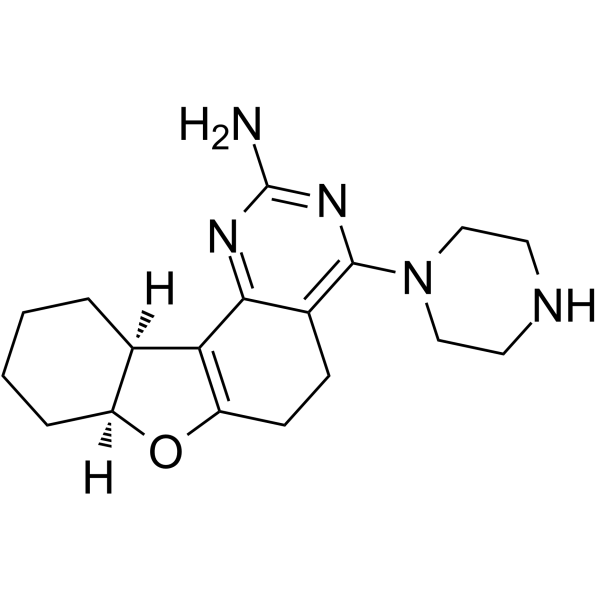 0 ImagesCat. No.: HY-14364CAS No.: 1082954-71-9A-987306 is a potent and oral bioavailable histamine H4 antagonist, with Kis of 3.4 nM and 5.8 nM for rat H4, and human H4. A-987306 shows anti-inflammatory activity in mice peritonitis model.
-
Desloratadine (Standard)
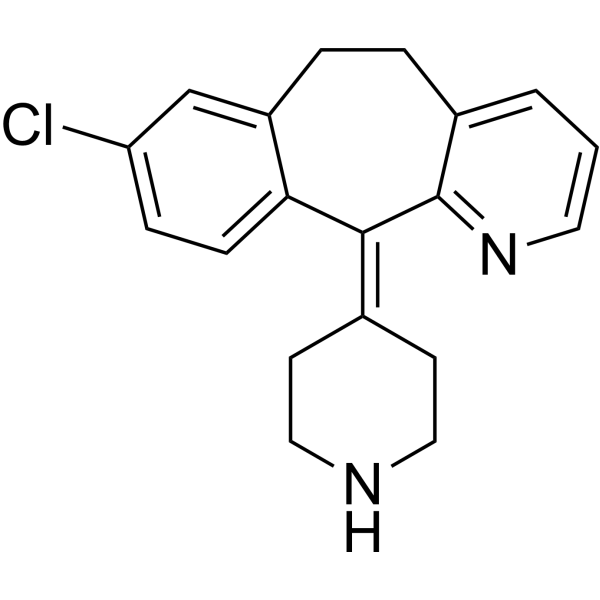 0 ImagesSynonyms: Sch34117 (Standard)Desloratadine (Standard) is the analytical standard of Desloratadine. This product is intended for research and analytical applications. Desloratadine (Sch34117) is the orally active major metabolite of the nonsedating H1-antihistamine Loratadine. Desloratadine is a selective H1-receptor antagonist that has anti-allergic and anti-inflammatory activities.
-
Pimethixene maleate (Standard)
 0 ImagesCat. No.: HY-B1101ARCAS No.: 13187-06-9Synonyms: Pimetixene maleate (Standard)Pimethixene maleate (Standard) is the analytical standard of Pimethixene maleate. This product is intended for research and analytical applications. Pimethixene maleate is antihistamine and antiserotonergic compound, acts as an antimigraine agent. Pimethixene maleate is a highly potent antagonist of 5-HT1A, 5-HT2A, 5-HT2B, 5-HT2C, histamine H1, dopamine D2 and D4.4 as well as muscarinic M1 and M2 receptors, with pKis of 7.63, 10.22, 10.44, 8.42, 10.14, 8.19, 7.54, 8.61 and 9.38, respectively.
-
Azelastine-13C,d3
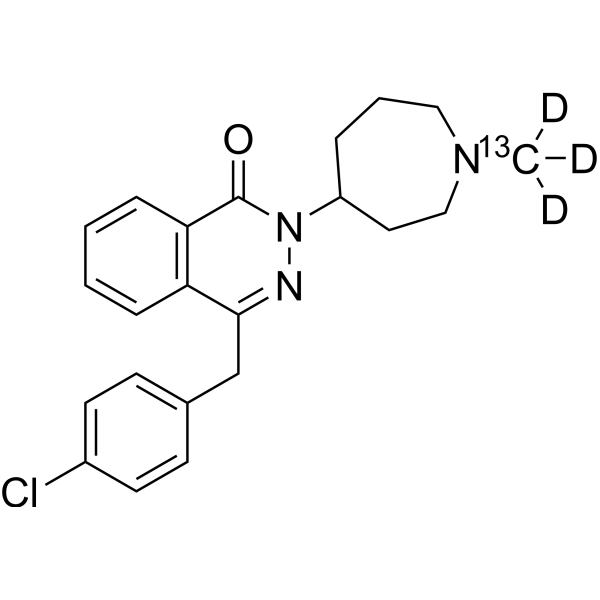 0 ImagesCat. No.: HY-B0462ASCAS No.: 1217019-80-1
-
Doxylamine succinate (Standard)
 0 ImagesDoxylamine succinate (Standard) is the analytical standard of Doxylamine succinate (HY-A0069). This product is intended for research and analytical applications. Doxylamine succinate is a first-generation antihistamine and acts as a histamine H1 receptor antagonist. Doxylamine succinate is orally active, possessing analgesic and hypnotic activities. Doxylamine succinate enhances the activities of CYP2B, CYP2A, CYP3A and thyroxine-glucuronosyltransferase via promoting substrate hydroxylation and thyroxine metabolic pathways. Doxylamine succinate decreases serum thyroxine (T4) level and elevates serum thyroid-stimulating hormone (TSH) level. Doxylamine succinate induces liver enlargement and increases the activities of hepatic microsomal cytochrome P450, cytochrome b5 and NADPH-cytochrome c reductase. Doxylamine succinate can be used for the research of nausea, allergy, insomnia.
-
[D-Tyr27,36, D-Thr32]-Neuropeptide Y (27-36), rat
![[D-Tyr27,36, D-Thr32]-Neuropeptide Y (27-36), rat](https://file.medchemexpress.com/product_pic/hy-p11411.gif "Click to View [D-Tyr27,36, D-Thr32]-Neuropeptide Y (27-36), rat Product Detail") 0 ImagesCat. No.: HY-P11411[D-Tyr27,36, D-Thr32]-Neuropeptide Y (27-36), rat is a fragment analogue of a neuropeptide Y (NPY) with cardiovascular activity. [D-Tyr27,36, D-Thr32]-Neuropeptide Y (27-36), rat can induce profound and sustained hypotension in both hypertensive and normotensive rats and its antihypertensive effect is partly attributed to its activity on histamine receptor. [D-Tyr27,36, D-Thr32]-Neuropeptide Y (27-36), rat can be used for studying antihypertensive effects.
0 ImagesCat. No.: HY-P11411[D-Tyr27,36, D-Thr32]-Neuropeptide Y (27-36), rat is a fragment analogue of a neuropeptide Y (NPY) with cardiovascular activity. [D-Tyr27,36, D-Thr32]-Neuropeptide Y (27-36), rat can induce profound and sustained hypotension in both hypertensive and normotensive rats and its antihypertensive effect is partly attributed to its activity on histamine receptor. [D-Tyr27,36, D-Thr32]-Neuropeptide Y (27-36), rat can be used for studying antihypertensive effects.
-
Hydroxyzine-d4 dihydrochloride
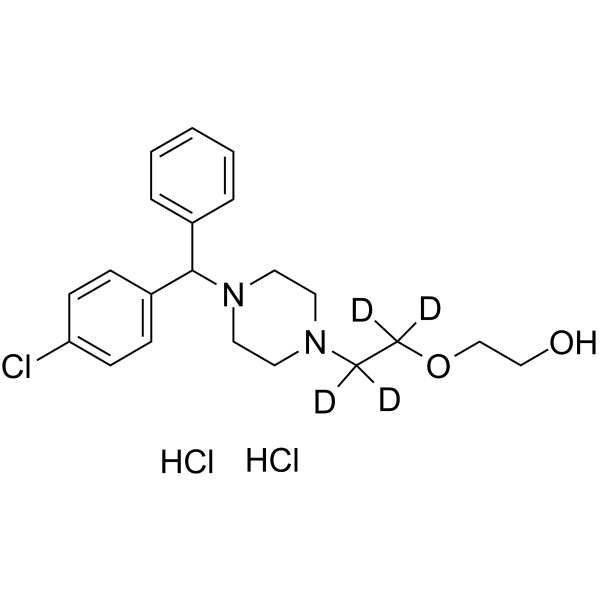 0 ImagesCat. No.: HY-B0548ASHydroxyzine-d4 (dihydrochloride) is deuterium labeled Hydroxyzine. Hydroxyzine is a heterocyclic histamine H1-receptor antagonist. Hydroxyzine has anticholinergic, anxiolytic and analgesic properties.
-
Famotidine-13C,d3
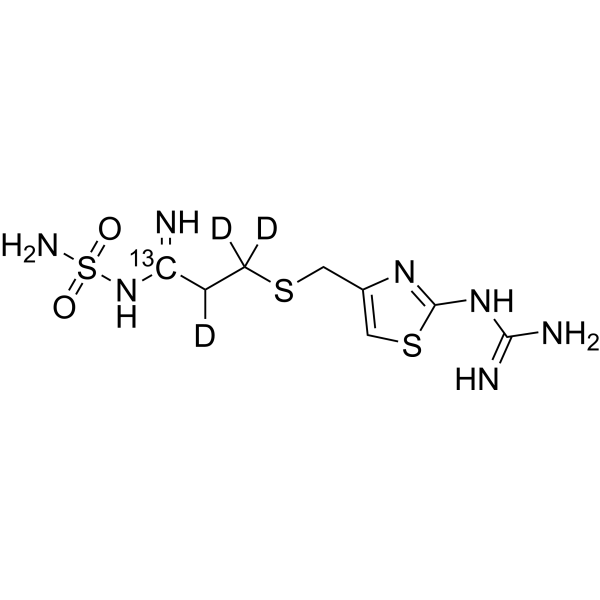 0 ImagesCat. No.: HY-B0377SCAS No.: 2744683-81-4Synonyms: MK-208-13C,d3Famotidine-13C,d3 (MK-208-13C,d3) is the deuterated, 13C-labeled Famotidine (HY-B0377). Famotidine (MK-208) is an orally active and highly selective histamine H2 receptor antagonist. It inhibits gastric acid secretion by blocking the Gs signaling pathway, and regulates intracellular cAMP and ERK pathways. Famotidine inhibits TLR3-mediated inflammatory pathways, and reduces the expression of various inflammatory mediators and interferon-related genes. Famotidine scavenges DPPH and nitric oxide free radicals, alleviates oxidative stress damage in gastric tissue, inhibits proMMP-9, improves vascular endothelial permeability, and restores the normal physiological functions of neutrophils and eosinophils. Famotidine crosses intestinal epithelial cells via facilitated diffusion and passive diffusion, blocks paracellular cation transport, and increases intestinal transepithelial electrical resistance. Famotidine reduces serum levels of transaminases and alkaline phosphatase, exerts analgesic effects and gastric protective effects simultaneously. Famotidine can be used in studies related to COVID-19, liver injury and acute gastric ulcer.
-
Impentamine dihydrobromide
 0 ImagesCat. No.: HY-107564CAS No.: 149629-70-9Synonyms: VUF 4702 dihydrobromideImpentamine dihydrobromide (VUF 4702 dihydrobromide) is a histamine H3 receptor antagonist with potential antihistamine activity. Impentamine dihydrobromide shows the strongest selective H3 antagonism among a series of 4(5)-(ω-aminoalkyl)-1H-imidazole compounds. The pA2 value of impentamine dihydrobromide is 8.4, showing its high efficacy in guinea pig jejunum. Impentamine dihydrobromide has a specific antagonistic binding site with the H3 receptor.
-
TAAR1 agonist 2
 0 ImagesCat. No.: HY-W909173CAS No.: 1804128-38-8TAAR1 agonist 2 (compound 30) is a full agonist of trace amine-associated receptor 1 (TAAR1) (pEC50=7.5). TAAR1 agonist 2 also exhibits agonist activity at H1 receptors and activates several members of the muscarinic acetylcholine receptor family, such as the M2 receptor (pEC50=5). TAAR1 agonist 2 can be used in the study of neuropsychiatric diseases.
-
NO-794
 0 ImagesCat. No.: HY-182643CAS No.: 105150-87-6NO-794 is a histamine H2 receptor antagonist. NO-794 inhibits gastric acid secretion in pylorus-ligated rats. NO-794 can be used for the research of peptic ulcers.
-
BMY-25271
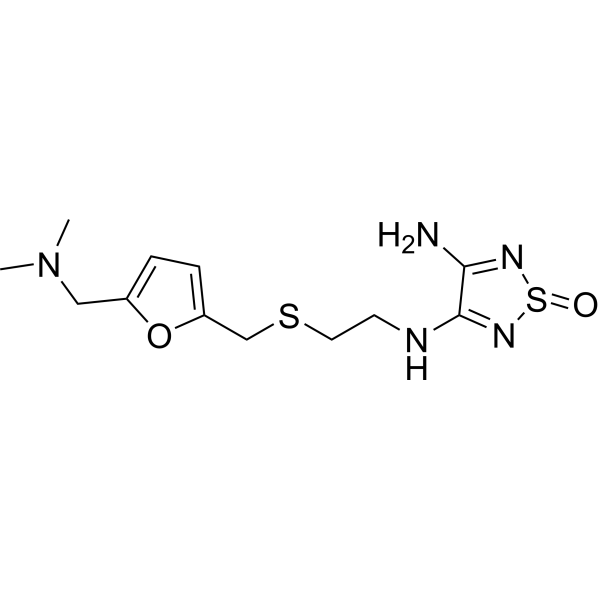 0 ImagesCat. No.: HY-100191CAS No.: 78441-82-4BMY-25271 is a histamine H2 receptor antagonist.

-
Roxatidine-d10 hemioxalate
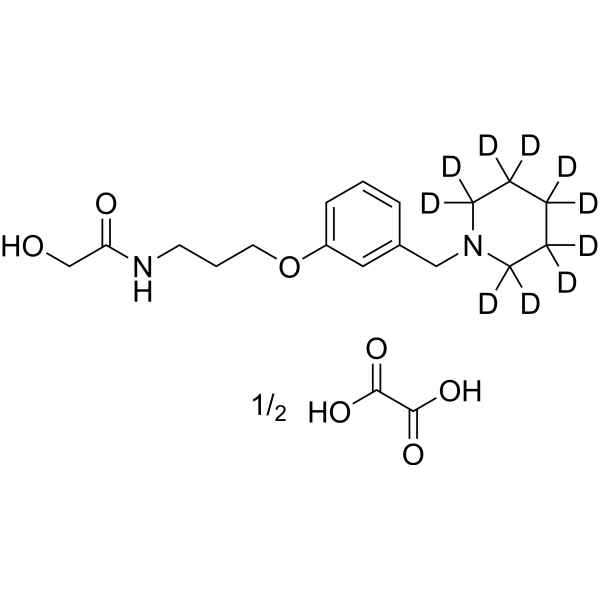 0 ImagesCat. No.: HY-137941SCAS No.: 2832423-41-1Roxatidine-d10 (hemioxalate) is the deuterium labeled Roxatidine hemioxalate.
-
Dexchlorpheniramine maleate (Standard)
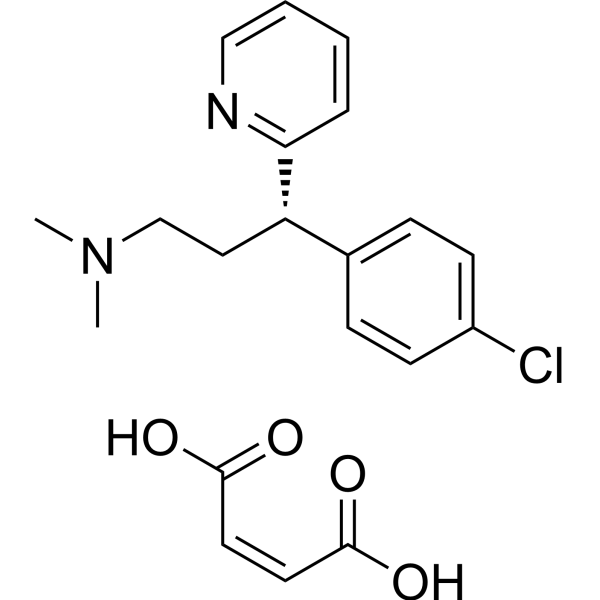 0 ImagesDexchlorpheniramine (maleate) (Standard) is the analytical standard of Dexchlorpheniramine (maleate). This product is intended for research and analytical applications. Dexchlorpheniramine maleate is an antihistamine with anticholinergic properties used in the study of allergic diseases.
-
TRM-115
 0 ImagesCat. No.: HY-19179CAS No.: 147779-46-2TRM-115 is a histamine H2 receptor antagonist. TRM-115 is promising for research of digestive system disease.
-
Dimephosphon
 0 ImagesCat. No.: HY-176248CAS No.: 14394-26-4Dimephosphon is an anti-inflammatory agent with antihistamine and antiserotonin activities. Dimephosphon helps maintain the conduction function of the spinal cord and reduces the excitability of spinal motor neurons in the area surrounding the lesion. Dimephosphon directly activates lymphatic vessel movement and improves lymphatic circulation. Dimephosphon can be used for the study of inflammatory edema, acute spinal cord injury and lymphatic circulation disorders.
-
UK-9040
 0 ImagesCat. No.: HY-123421CAS No.: 47453-14-5UK-9040, a derivative of the antihistamine Triprolidine (HY-B1808), is an orally active inhibitor of gastric secretory. UK-9040 reduces gastric acid, pepsin, and volume output in response to food, Insulin (HY-P0035), Histamine (HY-B1204), N-methyl histamine, and Pentagastrin (HY-A0261).




